Everything your water utility runs on. One platform.
Work orders for the crew. A portal for your residents. Analytics that show where the water actually goes — plus an AI layer that answers the phone and turns a resident's text into a dispatched job.
Unlimited users
Never priced per seat
No Esri license
Bring your GIS, or let us be it
Live in weeks
Not fiscal years
Implementation credited
Back in full on an annual commit
Three products. One system of record.
Start with the one that hurts most. They share the same assets, the same customers, and the same meter reads — so the second one costs you almost no setup.
The AI layer that ties the office to the field.
Most vendors bolt a chatbot onto a portal and call it AI. Ours sits between the resident and the crew, and it can act on both sides — because we own both sides.
AI Inbound
It answers the phone before your staff has to.
Picks up 24/7, identifies the account, reads the meter live mid-conversation, and resolves the routine calls outright. What it cannot close, it hands to your clerk with the full context already gathered.
AI SMS
Two-way texting that actually settles the question.
Residents text a number and get a real answer about usage, a bill, or a leak alert — not a link to a login page. Outbound works too: shutoff notices, boil-water advisories, and leak warnings that people actually read.
Text Portal
The whole portal, for people who will never install an app.
Check usage, get a balance, report a problem, all over plain SMS. No app, no download, no password reset. For a lot of your customers this is the only portal they will ever use — and it counts as adoption.
AI Dispatch
A resident report becomes a routed work order.
This is the part nobody else can do. A text or portal report gets triaged, matched to the nearest asset, given a priority, written into Fluvio Field as a work order, and routed to the right crew — without a clerk retyping it.
What AI Dispatch actually does
Resident texts "water in my street"
AI triages + locates the asset
Work order created in Field
Routed to the on-call crew
One system of record means the handoff is a database write, not a phone call to another department.
The work underneath
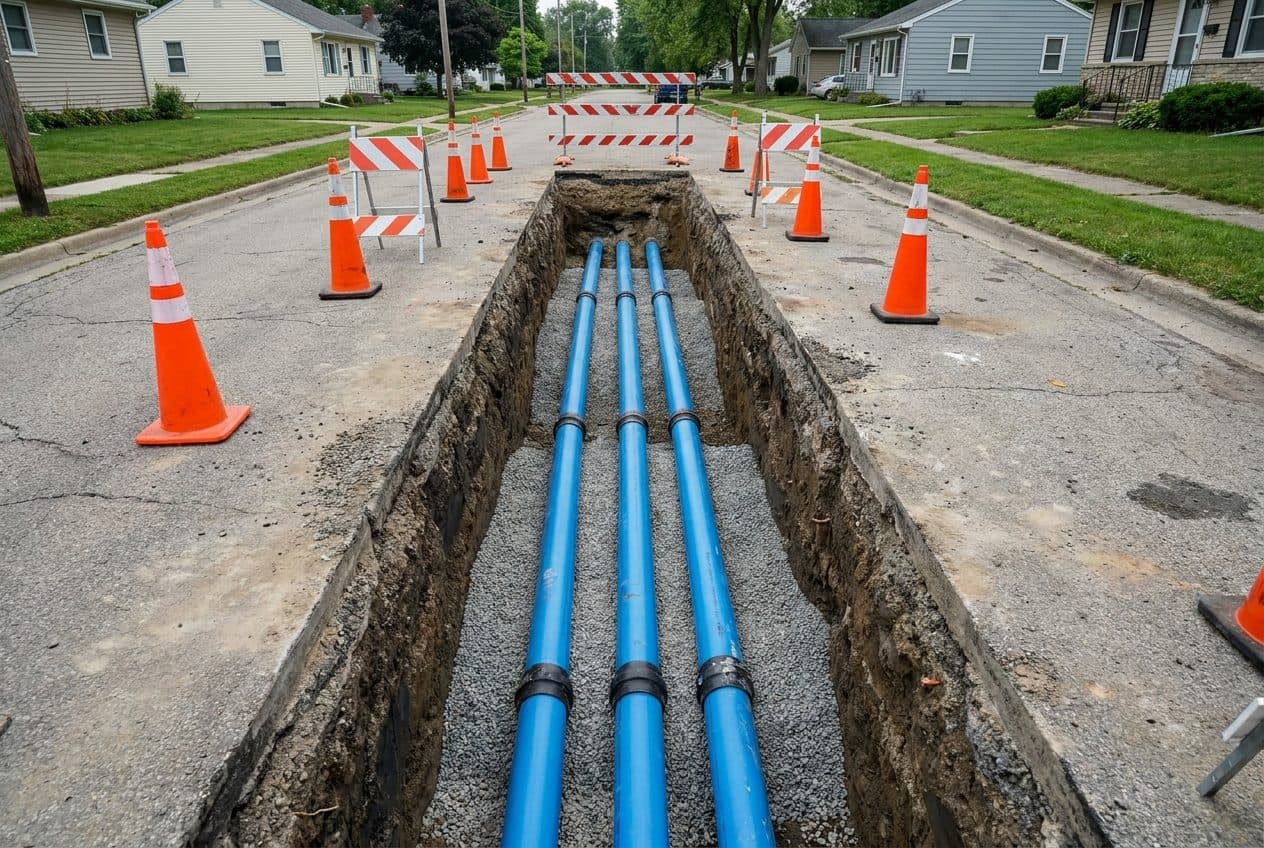
Every asset you own is buried, aging, and someone else's memory.
Fluvio keeps the record above ground — what was installed, what was repaired, and what is due — so it survives the operator who knew it all.
The software isn't the problem.
The gate in front of it is.
Legacy work order platforms are sold in three layers, and only one of them is software. The figures below are their prices, taken from published municipal contracts.
License + maintenance
$10.7k – $72k / yr
Priced per named seat, plus module licensing. Small utilities land near the bottom; mid-size districts near the top.
Implementation
$50k – $190k one-time
Billed by a third-party integrator, not the software vendor. Six to eighteen months before anyone opens a work order.
Esri + customization
Ongoing, on top
A required ArcGIS license stack, and every report change billed back through the same integrator.
From a public municipal contract — not our pricing
One California water district paid $934,000 to deploy a legacy work order system across 13,484 connections.
That is roughly $69 per connection before a single work order was written. Every figure on this page comes from published municipal contracts and budget disclosures.
Fluvio is priced at a fraction of that — and we'll tell you the number on the first call.
See Fluvio pricingThey sell you an implementation.
We sell you a system.
How Fluvio Field stacks up against the legacy work order platforms most water utilities are running today.
Users
Licensed per named seat
Unlimited users, always included
GIS
Requires an Esri ArcGIS license stack
Maps built in — bring Esri or skip it entirely
Implementation
$50k–$190k through a third-party integrator
A scoped fee, credited back on an annual commit
Reporting
Crystal Reports / SQL — unsupported, extra cost
No-code report builder, monthly ops PDF included
Time to live
6–18 months
Weeks, not fiscal years
Changes & customization
Billed back through the integrator
You talk to the people who build it
Training
Multi-day certification before day one
Usable by a crew the morning it turns on
Pricing
Quote-gated, negotiated per deal
A straight answer on the first call
“Do you have GIS?” Yes — and you don't need one.
Most work order platforms treat a mature Esri deployment as the price of entry. Plenty of utilities under 20,000 connections don't have one, and shouldn't have to buy one to dispatch a crew.
You have no GIS
Drop assets on a map, draw your mains, and mark valves and hydrants as you find them. Fluvio becomes your GIS. No Esri license, no consultant, no basemap project.
You already have Esri
We read your ArcGIS feature services directly, and import shapefiles or GeoJSON into the asset model. Your GIS team keeps their system; your crews get one that opens on a phone.
You want writes back to Esri
On the roadmap, and we will build it against your ArcGIS version when you need it. We would rather tell you that plainly than pretend it ships today.
Who builds this
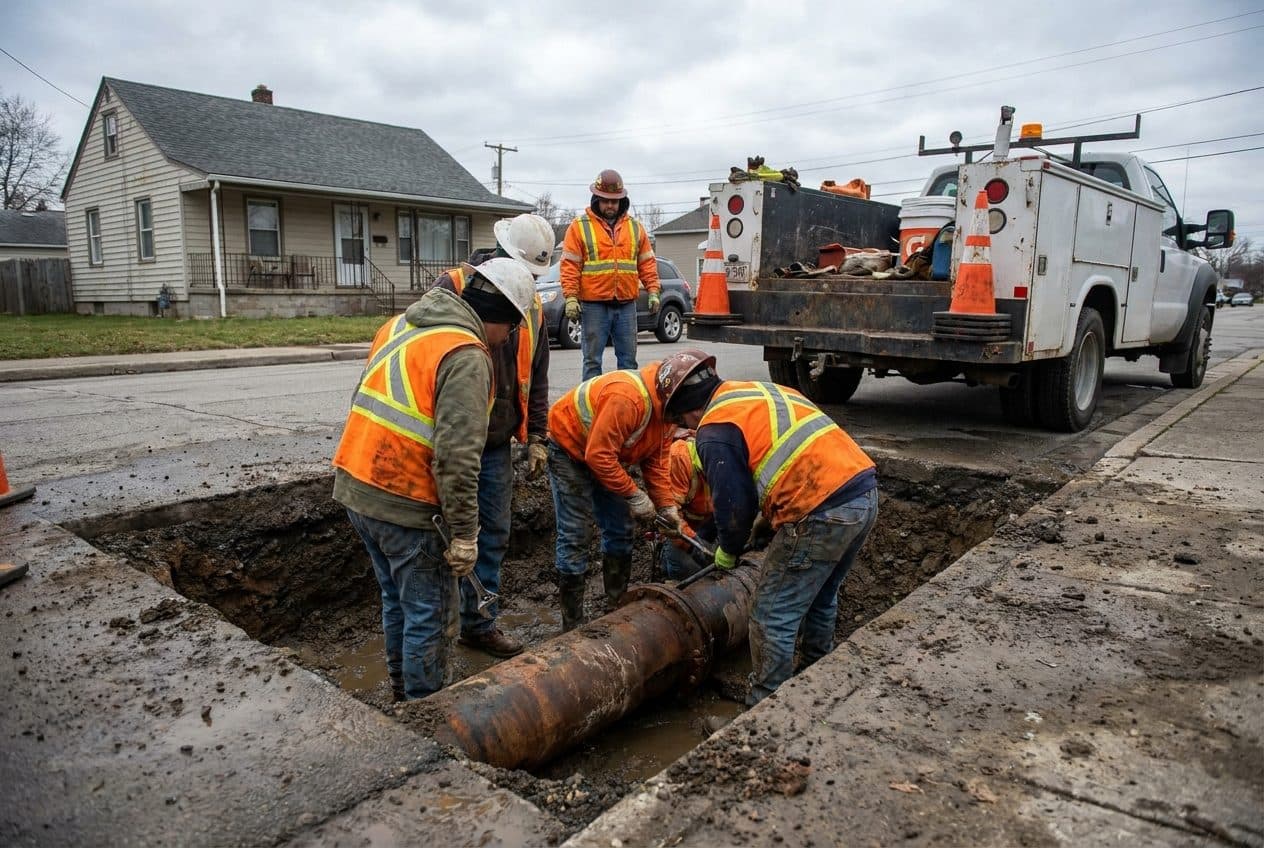
We learned this in the ditch, not a conference room.
Fluvio comes out of a meter installation company. We have spent years inside water utilities watching good crews fight the software they were sold.
Pricing
Fluvio Field: $15,000 a year at 4,000 connections.
Priced on connection count, not per seat. Unlimited users, no Esri license, and an implementation fee we credit back in full when you commit to a year. Ask and we'll tell you your number on the first call.
We didn't learn this in a conference room. We learned it in the ditch.
Fluvio comes out of a meter installation company. We spend our days inside water utilities — pulling meters, tracing mains, and watching crews fight the software they were sold.
The pattern never changes. A utility buys an enterprise work order platform, pays an integrator more than the license to turn it on, waits a year, and then discovers that a simple monthly report is a change order. Meanwhile the operators keep a spreadsheet on the side, because that's the thing that actually works.
So we built the version that assumes the opposite: that a crew should be able to use it the morning it turns on, that reports belong to the people who need them, and that nobody should have to buy a GIS deployment to schedule a valve exercise.
No integrators. No certification track. No fluff.
Non-negotiables
Your whole crew, not a seat count
Bring your GIS, or let us be it
Live before the next budget cycle
Stable cloud, no platform limbo
Five utilities. Locked-in launch pricing. Enrolling now.
We're onboarding our first five pilot utilities. Pilot partners get launch pricing locked for their first three years, direct access to the team building the platform, and hands-on migration off whatever they're running today.
5
Pilot seats
Weeks
To go live
Credited
Implementation
Resources for utility managers.
Book a 30-minute walkthrough.
We'll show you the platform on your AMI vendor, run the ROI math for your utility, and answer everything you ask.
One email a month. No fluff.
What we're learning about work orders, non-revenue water, and getting software into small utilities without a year-long project.